 Shamba Salama
Connected, but Not Included: Why Kenya's Smallholder Farmers Need Data That Sees Them
Sometimes when you are not digital, you do not get the information.
A farmer in Rongo, September 2026
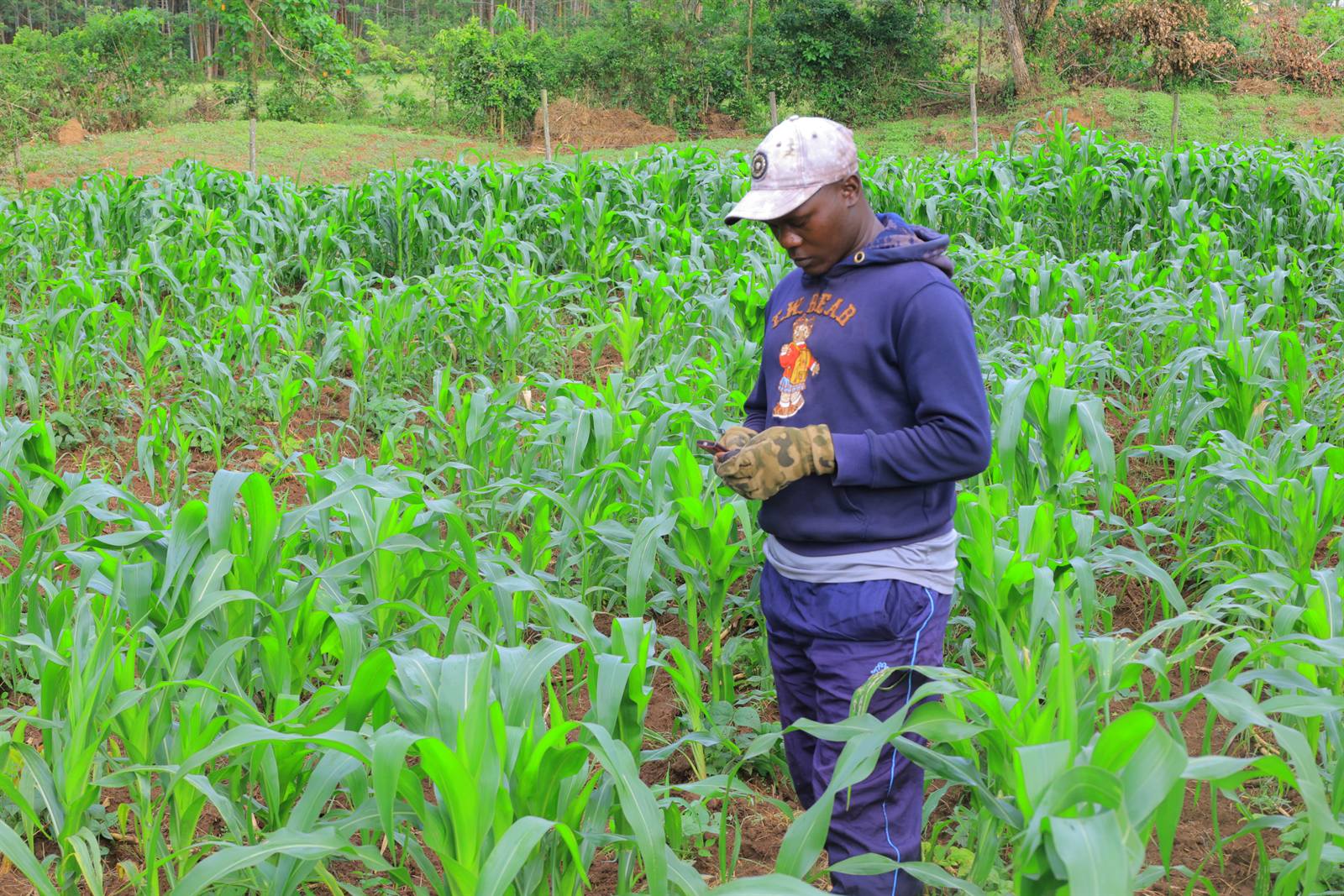
A farmer in Rongo said this to our team during interviews we carried out in September and October 2026. It has stayed with me, because it captures a question I keep returning to at Shamba Salama: does having a phone and internet access guarantee that you are included?
Connected, but not equally
I cannot overlook the power that mobile phones and internet access have had in Kenya. M-Pesa brought mobile money to millions of Kenyans who had never had a bank account, including many in rural communities.
But access is still uneven. Internet coverage remains poor in parts of the country, especially in rural and remote areas. Phone ownership itself is lower in rural areas: in the 2019 Census, 36% of people in rural areas owned a mobile phone, compared with 59% in urban areas. And about 27.4 million feature phones were still active on Kenyan networks in 2026.
Even owning a phone is not the same as being reached. Of the 13 farmers we interviewed in Rongo, seven had never had contact with any agricultural advisory service. Only two said they received advice from the county agriculture office by SMS or other digital channels.
This matters because many digital services, including AI tools that give farming advice, are built for smartphones. Can a farmer in the most remote part of the country benefit from them if she has a basic phone and an unreliable network?
Systems built elsewhere, for farms no one has measured
Many of the AI tools used in Kenya are trained largely on data from other countries. Can a model trained on farms elsewhere give reliable advice to a smallholder farmer in Rongo, in Migori County?
Kenya does not lack the expertise to build these systems. There are people here who can build them very well. The bigger challenge is data sparsity: many rural farms have almost nothing recorded about them.
At Shamba Salama, we think about two kinds of data. The first is what farmers can tell us themselves, such as what they plant, when they plant and roughly what they harvest. The second is what no one has ever measured on their farms, such as soil nutrients. That second kind is what is most often missing.
This is not the farmers' fault. Measuring soil properly takes time and money, and soil tests are often beyond what a smallholder farmer can afford. Yet these farmers need good advice as much as anyone, and they face the greatest risk of getting it wrong, because the poorest farmer is usually the least recorded.
The cost of wrong advice
I say this with conviction, because wrong advice is not a small mistake. A farmer who plants at the wrong time can lose a whole season, and the wrong fertiliser advice can damage a farm for several seasons. These farmers are vulnerable in two ways: it is hard for them to tell good advice from bad, and they rarely have any way to question the advice they receive.
Trust, once lost, is hard to rebuild. One older farmer told us she will not act on a forecast until she sees the rain with her own eyes, because trusting forecasts has cost her before. Another said that if our messages were wrong once or twice, he would conclude they were misleading him.
We cannot ignore affordability either. Every farmer we interviewed buys their own seed with their own money, and none receives sustained support from any programme. When wrong advice costs them a harvest, it is a double loss, and no one compensates them for it.
What we are doing about it
Our research was small, 13 interviews, so it describes these farmers rather than all of Kenya. But it was enough to change how we are designing our next service, an early-warning service for farmers in Rongo:
- Separate warnings for floods and droughts, because farmers told us they need very different notice for each, including longer, seasonal warning for drought.
- Messages in Dholuo or Kiswahili, written so that a family member can read them aloud for a farmer who cannot read.
- Delivery on basic phones by SMS, so no one needs a smartphone or internet access to be reached.
- Advice that admits uncertainty, telling a farmer to wait when we are not yet sure, rather than guessing.
- Success measured by whether farmers act on our alerts, not by how many messages we send.
Does connectivity guarantee inclusion?
So I return to the question I started with. Does connectivity guarantee inclusion, or do these systems mostly favour those who were already ahead?
From what I have seen in Rongo, a phone alone is not enough. We must treat data sparsity as urgent: not only so that these farmers are included in the systems that advise them, but so that those systems can admit when they do not know something. If we build these systems, everyone must be included. And we must remember that these systems are only as good as the data beneath them.
Sources
- Shamba Salama, How Smallholder Farmers in Rongo Anticipate and Absorb Weather Risk, field research report, October 2026 (13 qualitative interviews; not a representative survey).
- Communications Authority of Kenya, Fourth Quarter Sector Statistics Report for the Financial Year 2025/2026 (2026).
- Kenya National Bureau of Statistics and UN Women, Gender Statistics and Indicators: Analysis of Mobile Phone Ownership (SDG 5.b.1), 2019 Kenya Population and Housing Census.
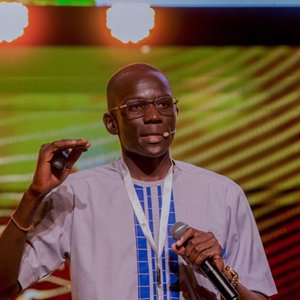
Raised in a Migori farming family. Software engineering graduate, now studying Data Science and Analytics at USIU Africa. Built and delivered the KeNIA-backed pilot.
Sources for this piece are listed above. Every number we publish traces to a source we can produce within one hour — how we handle claims.